NATYAKALPAADANCE STUDIOBharatanatyam · Preserving Art & Culture

Visharad Purna

Akhil Bhartiya Gandharva Mahavidyalaya Mandal · Syllabus for the exam

← Back to Exams & Courses
400Total Marks
180Minimum Passing Marks
250Practical Marks (Rangmanch 50 + Viva 200) · minimum passing 128
150Theory Written (75 + 75, each paper) · minimum passing 26 + 26
50minPractical time for each candidate

Theory (Written) – Paper I

  1. Comparative study of the main classical dance styles in terms of:
    • Repertoire, Technique, Nritta Content, Abhinaya Content, Music, Costume
  2. Knowledge of the dance drama styles:
    • Bhagavata Mela Natakam, Kudiyattam, Yakshagana
  3. Concept of Sthayi Bhava & Sanchari / Vyabhichari Bhavas.
  4. Concept of Bhava, Vibhava (Alambana & Uddipana) and Anubhava.
  5. Knowledge about the following great poets & composers (any SIX):
    • Jayadeva, Meerabai, Kshetrayya, Swathi Thirunal, Dharmapuri Subbaraya Iyer, Tanjavur Serfoji Maharaj, Papanasam Sivan, Arunachala Kavirayar, Ghanam Krishna Iyer, Tanjore Quartet, Oothukkadu Venkata Subbaiyer, Gopalakrishna Bharati, Purandara Dasa

Theory (Written) – Paper II

  1. Complete notation of the items learnt in the systematic way.
  2. A study of Rang-Manch:
    • As mentioned in Natya Shaastra
    • As required for the present-day dance recital in terms of lighting and acoustics
  3. A brief note on the development of the art of dance from the times of Natya Shastra to the present day.
  4. Knowledge about the mythological characters like Shiva / Nataraja, Krishna, Rama & Devi in her various forms, and stories related to them portrayed in Indian classical dances, such as:

Note: Inclusion of earlier course is compulsory and can be examined.  A. D. - Abhinaya Darpan  ·  N. S. - Natya Shastra

Practical

  1. Varnam (completion of the Varnam learnt earlier):
    • Presentation of the item
    • Identification of the poet, raga & tala of the varnam
    • Knowledge of the rasa and bhava that feature in the item
    • Explanation / meaning of the verses / lines used
    • Ability to sing the item
    • Reciting the Tirmanam
  2. Javali / Shringar Padam and one Bhakti Padam (in any Indian language):
    • Presentation of the item
    • Identification of the poet, raga & tala of the item
    • Knowledge of the rasa and bhava that feature in the item
    • Explanation / meaning of the verses / lines used
    • Analysis of the Nayika and the type of Bhakti
    • Ability to sing the item
  3. Theory (oral, with demonstration):
    • Viniyogas of Shirobheda, Drishtibheda & Griva Bheda
    • Natuvangam using Tattakali of all the items learnt up to Visharad Purna
    • Presentation of a line of composition given on the spot (both abhinaya & nritta)
  4. Dashavatar Hasta & Devata Hasta from Abhinaya Darpan: Parvati Hasta, Shanmukha Hasta, Lakshmi Hasta, Shiva Hasta.
  5. Natuvangam: the basic rendition of the song and playing Adavus on Tattakali.
  6. Manch Pradarshan: demonstration performance of the items of choice (includes Nritta – Nritya – Natya). Duration 20 to 30 minutes.

Marks Distribution – Practical 250

Varnam - 60 Marks

Footwork - 10 · Angashuddha - 20 · Rhythm - 10 · Abhinaya - 20

Shringar Padam / Javali - 20 Marks

Mukhaja Abhinaya - 10 · Shariraja Abhinaya - 10

Bhakti Padam - 20 Marks

Mukhaja Abhinaya - 10 · Shariraja Abhinaya - 10

Theory Oral - 70 Marks

Nattuvangam - 30 · Viniyoga - 20 · Choreography - 20

Previous Year Items - 30 Marks

Nritta - 15 · Abhinaya - 15

Manch Pradarshan - 50 Marks

Nritta - 15 · Abhinaya - 15 · Presentation - 20
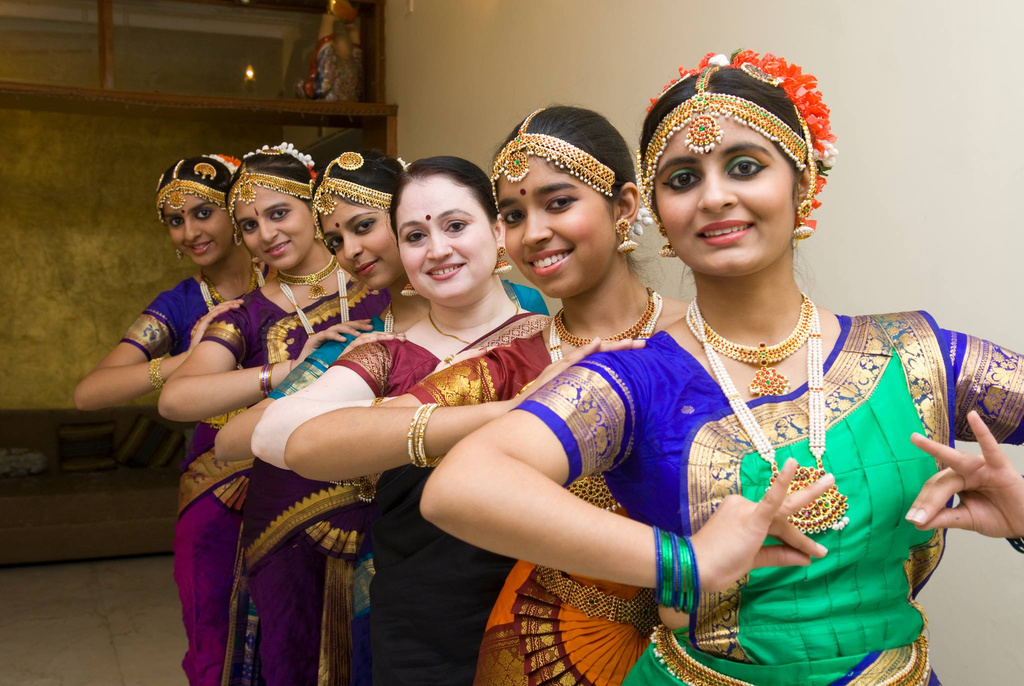
Natyakalpaa students posing together in Bharatanatyam costume