
NATYAKALPAADANCE STUDIOBharatanatyam · Preserving Art & Culture

Bhagavata Purana

CBSE Grade 11 · Topic 2 · Acquaintance with the themes
← Back to Grade 11 Syllabus
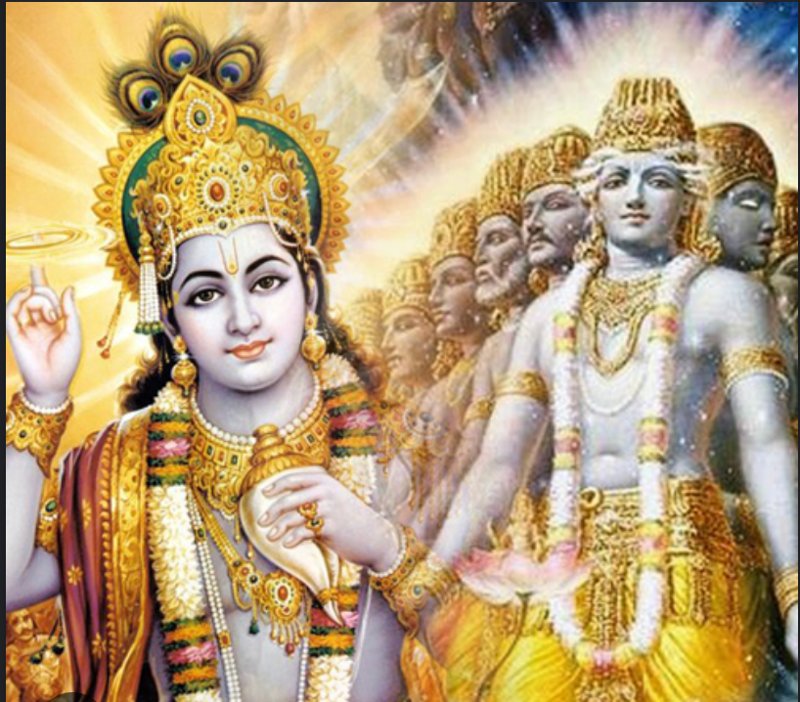
Lord Krishna revealing his cosmic form

The Bhagavata Purana (Srimad Bhagavatam) is one of the most sacred Hindu scriptures, dedicated to the glory of Lord Vishnu and especially Lord Krishna. Traditionally attributed to Maharishi Vedavyasa, it consists of 12 Skandas (Cantos) and approximately 18,000 verses.

The text emphasizes Bhakti (devotion) as the highest path to spiritual realization.

The 12 Skandas

  1. Prathama Skanda (First Canto): Introduces the Bhagavatam and its purpose. It narrates the story of King Parikshit, who is cursed to die in seven days, and the arrival of Sage Shukadeva, who begins narrating the Bhagavatam to him. The importance of devotion to God is emphasized.
  2. Dvitiya Skanda (Second Canto): Describes the cosmic form (Virat Purusha) of the Lord and explains the process of creation. It teaches meditation on the Divine and highlights the path of Bhakti as the means to liberation.
  3. Tritiya Skanda (Third Canto): Contains the dialogue between Vidura and Maitreya. It explains the creation of the universe, the story of Kapila Muni and his teachings on Sankhya philosophy, and the incarnation of Varaha, who rescues Mother Earth.
  4. Chaturtha Skanda (Fourth Canto): Includes the stories of Daksha Yajna, Sati and Lord Shiva. It also narrates the inspiring story of Dhruva, whose unwavering devotion earns him an eternal place as the Pole Star.
  5. Panchama Skanda (Fifth Canto): Describes the life and renunciation of King Rishabha and his son Bharata. It also presents detailed descriptions of the universe, geography, planetary systems and cosmic structure according to Puranic tradition.
  6. Shashtha Skanda (Sixth Canto): Focuses on the power of devotion and repentance. The famous story of Ajamila, who attains salvation by uttering the name of Narayana at the time of death, is narrated here.
  7. Saptama Skanda (Seventh Canto): Dedicated mainly to the story of Prahlada, the great devotee of Lord Vishnu. It culminates in the appearance of Narasimha Avatar, who destroys the demon king Hiranyakashipu and protects Prahlada.
  8. Ashtama Skanda (Eighth Canto): Contains stories of several incarnations of Vishnu, including Kurma Avatar and Vamana Avatar. It also narrates the famous episodes of the Samudra Manthana (Churning of the Ocean) and Gajendra Moksha.
  9. Navama Skanda (Ninth Canto): Describes the genealogies of royal dynasties, including the Solar Dynasty (Surya Vamsha) and Lunar Dynasty (Chandra Vamsha). It includes the lineage of Lord Rama and many noble kings.
  10. Dashama Skanda (Tenth Canto): The largest and most celebrated Skanda. It narrates the complete life and divine play (Leela) of Lord Krishna:
    • Krishna Janma
    • Putana Vadha
    • Kaliya Mardana
    • Govardhana Dharana
    • Rasa Leela
    • Kamsa Vadha
    • Dwaraka Leelas
    This Skanda forms the basis of many dance dramas and classical dance compositions.
  11. Ekadasha Skanda (Eleventh Canto): Contains the Uddhava Gita, in which Lord Krishna imparts spiritual wisdom to Uddhava before departing from the world. It discusses devotion, detachment and the nature of the soul.
  12. Dvadasha Skanda (Twelfth Canto): The concluding Skanda. It describes the future age of Kali Yuga, the decline of righteousness and the eventual dissolution of the universe. It concludes by glorifying the Bhagavata Purana as a path to liberation through devotion.

Conclusion: The Bhagavata Purana is a treasure house of devotion, philosophy and mythology. Its stories of Dhruva, Prahlada, Ajamila, Gajendra, Dashavatara and Krishna Leela continue to inspire devotees and serve as important themes in Bharatanatyam and other Indian classical dance traditions.

Sadhana, Poshana (Vasan) and Nirodha Skanda

These are thematic classifications derived from the Bhagavata Purana, often used in traditional studies and dance syllabi to group its contents by spiritual purpose. They are not separate books; they are educational groupings of stories drawn from different parts of the 12 Skandas.
SadhanaSpiritual practice and preparation
Poshana (Vasan)Divine protection and nurturing of devotees
NirodhaDivine withdrawal and Krishna’s supreme manifestations
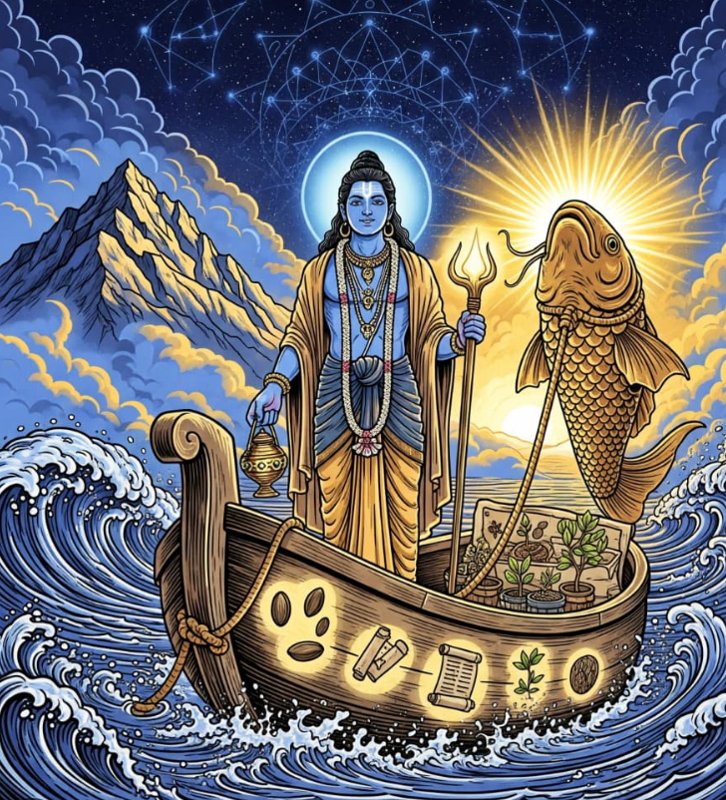
Illustration of Lord Vishnu as Matsya guiding Manu's boat through the deluge

1Sadhana Skanda – The Story of Manu and the Description of the World

Deals with the process of creation and the path of spiritual discipline. It includes the story of Manu, who was saved by Lord Vishnu in the Matsya Avatar during the great deluge. It also describes the structure of the universe — the earth, planetary systems, mountains, oceans and cosmic order — and teaches the importance of dharma, devotion and divine guidance.

2Vasan (Poshana) Skanda – Prahlada Charitra

Focuses on divine protection of devotees. It narrates the story of Prahlada, the devoted son of the demon king Hiranyakashipu. Despite severe torture and opposition from his father, Prahlada remained steadfast in his devotion to Lord Vishnu, who manifested as Narasimha Avatar to protect him and destroy evil.

3Nirodha Skanda – Birth and Life of Krishna

Centred on Lord Krishna’s divine incarnation and life: his birth in Mathura, his childhood in Gokula and Vrindavan, his playful leelas and his protection of devotees. Important episodes include Putana Vadha, Kaliya Mardana, Govardhana Dharana, Rasa Leela and Kamsa Vadha.