 NATYAKALPAADANCE STUDIOBharatanatyam · Preserving Art & Culture
Madhyama Purna · Folk Dances & Dance Dramas of India
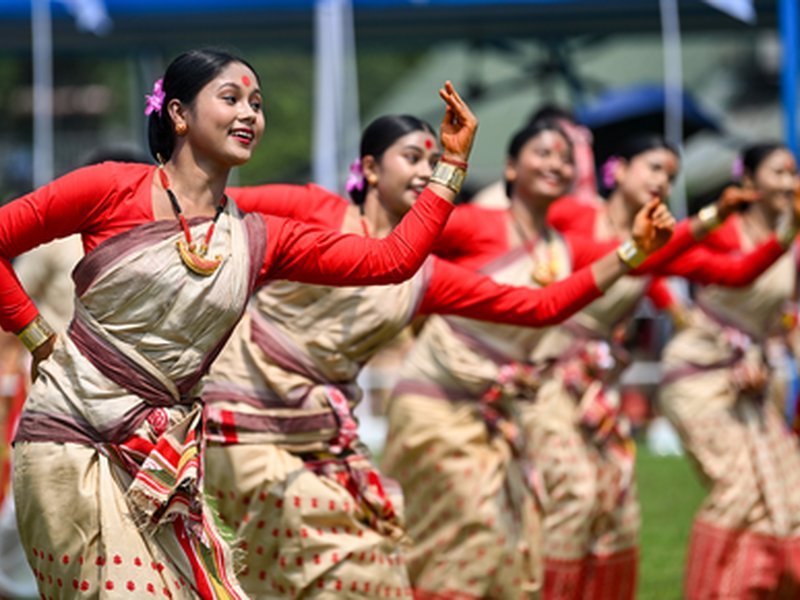
Bihu is a vibrant folk dance of Assam in northeastern India. It is closely connected with the agricultural traditions of the Assamese people and celebrates the arrival of spring and the harvest season.
It is mainly performed by young men and women during the Bihu Festival, which marks the Assamese New Year and the beginning of the farming cycle.
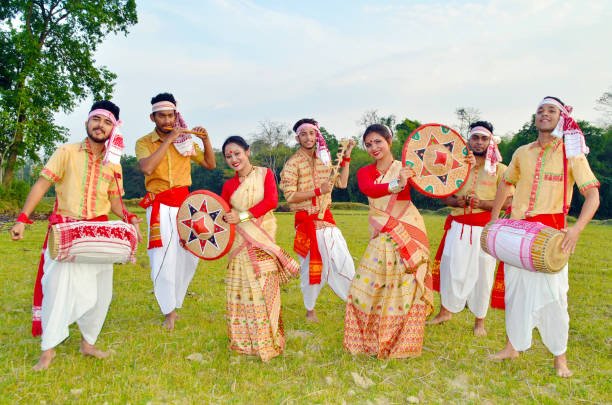
There are three main Bihu festivals:
Bihu is performed with lively folk music. The music is energetic and encourages fast, joyful movements.
Bihu dance is an important cultural symbol of Assam. It reflects youth, happiness, fertility and community celebration. It expresses the joy of spring, agricultural prosperity and social harmony, and plays a vital role in preserving the traditions, music and cultural identity of the Assamese people.