 NATYAKALPAADANCE STUDIOBharatanatyam · Preserving Art & Culture
Praveshika Pratham · Theory (Oral) · Akhil Bhartiya Gandharva Mahavidyalaya Mandal
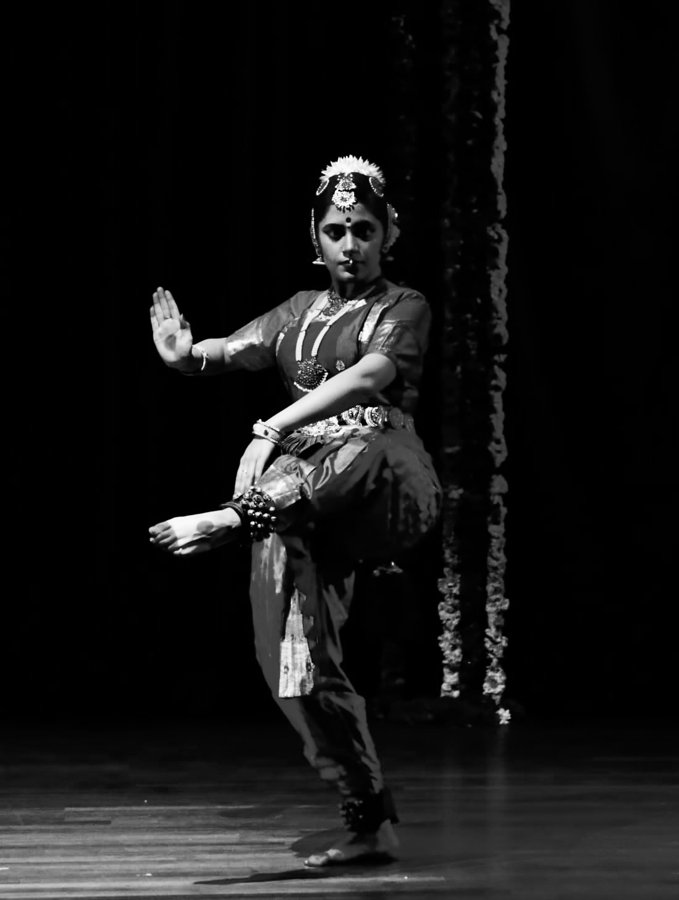
The word Adavu comes from the Tamil word “Adu”, which means to dance or to move rhythmically.
Definition: Adavu is the basic unit of movement in Bharatanatyam. It is a structured combination of footwork, hand gestures, body posture, and rhythm. It forms the foundation technique of Bharatanatyam and is practiced repeatedly to develop balance, precision, coordination, rhythmic sense (laya), and stamina.
Main Features of Adavu: An Adavu is a systematic sequence of movements performed in a rhythmic pattern. It involves the coordinated use of different parts of the body, namely:
Thus, Adavus train the dancer in complete body coordination and control. Adavus are performed to specific syllables called Sollukattu or Bols such as: Tai Ya Tai, Tai Hat Tai Hi, Tai Dhit Tai.
In Bharatanatyam there are several groups of Adavus, which form the technical base of the dance.
Importance of Adavus: The adavus form the foundation of Bharatanatyam. They are the basic dance steps that help in developing rhythm, balance, posture, coordination, and body control. Regular practice of adavus improves grace, stamina, and precision in movements, forming the base for performing all Bharatanatyam items effectively.